CASE — 03 / ADIDAS / 2022
Making sustainability information clearer, more credible, and better connected to products
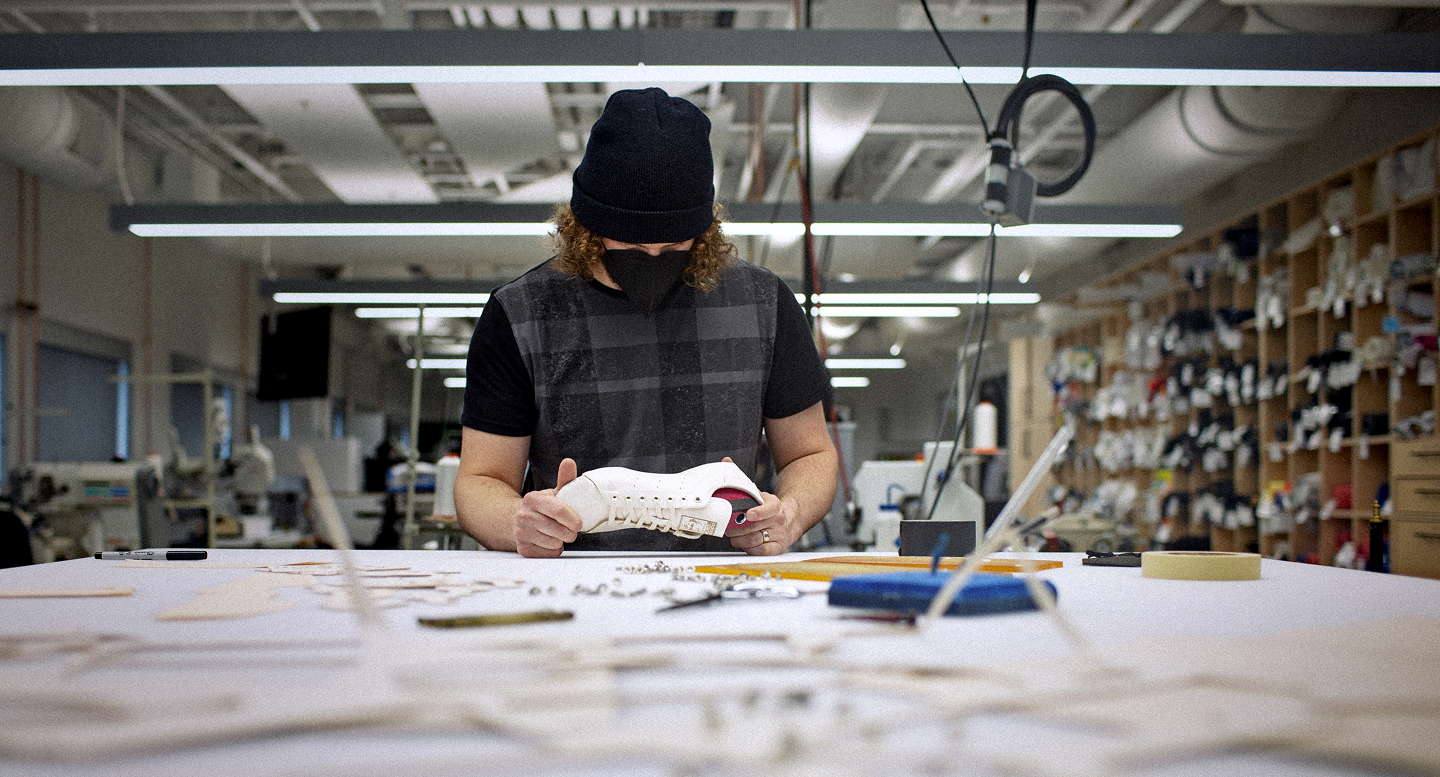
— AT A GLANCE
ROLE
Senior Product Designer (freelance)
TIMEFRAME
2022
PRODUCT DOMAINS
Sustainability hub on adidas.com
Proposed: PLPs, PDPs, adidas app
RESEARCH
18 in-depth interviews
5 markets (DE, UK, US, FR, ES)
FOCUS
Designing for credibility, comprehension, and coherence, so that adidas' sustainability communication is both trustworthy and effective.
OUTCOME
The sustainability hub launched on adidas.com, replacing fragmented, marketing-driven content with an evidence-based resource. The product-surface work across PLPs, PDPs, and the app was delivered as a set of design proposals.
At adidas, I was the dedicated designer working on the sustainability track within the Category Experience team. My focus was on creating a sustainability experience that complemented commercial product journeys, helping consumers understand what adidas is truly doing, rather than what it claims.
— CONTEXT
adidas manages a digital platform designed for product discovery and sales. Within it, sustainability had to compete for attention against a commercial experience it was never originally meant to coexist with.
The audience wasn't easy to win over either. Sustainability-minded consumers have witnessed greenwashing across the fashion industry, and their default attitude toward big corporate brands is one of distrust.
— RESEARCH
Together with UX researcher Konstantin Escher, I co-designed a research study across five European markets, contributing to research planning, interviews, analysis, and the final report.
The research surfaced three distinct problem areas:
Consumers don't trust what they can't verify. Participants expressed fatigue with sustainability promises from fashion brands. Mission statements are meaningless without supporting evidence: facts, numbers, proof of progress. The existing content is seen as marketing-driven.
Access to education was difficult, and understanding it was even harder. Content was hidden, fragmented, and filled with self-invented terminology. Those who managed to find and understand it reported a higher brand image, but most never reached that point.
Sustainability was disconnected from the products themselves. Information appeared inconsistently on PDPs and PLPs: recycled-material percentages on some items, none on others, opaque labels like "Better Cotton Initiative" without explanation.
The audience we're designing for is well-educated, skeptical, and self-reflective. They've researched sustainable fashion before visiting adidas.com. Our content isn't their first encounter; they expect substance, validation, and data to challenge their baseline skepticism of corporate promises.
— FRAMEWORK
The three research findings were mapped to three distinct design problems. Along with the team, these were documented in an opportunity tree centered around a shared vision: that consumers should always feel confident and well-informed about sustainability when buying a product at adidas, and see adidas as a trusted, open, and transparent brand.
From this, three pillars emerged:
Confidence. How can we become more credible on sustainability in the eyes of consumers?
Comprehension. How can we educate and inform consumers about sustainability?
Coherence. How can we help consumers easily find sustainable products and sustainability information, no matter where they are in the experience?
I used these three pillars as the organizing framework for my design work. Each required a different kind of answer, but they were closely connected: credibility without comprehension remains abstract, comprehension without coherence stays hidden, and coherence without credibility becomes empty labeling.
— CONFIDENCE
How can we make sustainability claims at adidas seem verifiable instead of just aspirational?
The research revealed a strong need for proof. Consumers didn't want to be told what adidas represented. They wanted to see what adidas had truly accomplished.
While working at adidas headquarters in Amsterdam, I saw a wall on one of the floors dedicated to the company's sustainability history, featuring photos, milestones, and initiatives dating back to the 1980s. I was surprised by how much adidas had accomplished over the years and how little of it was visible to consumers.
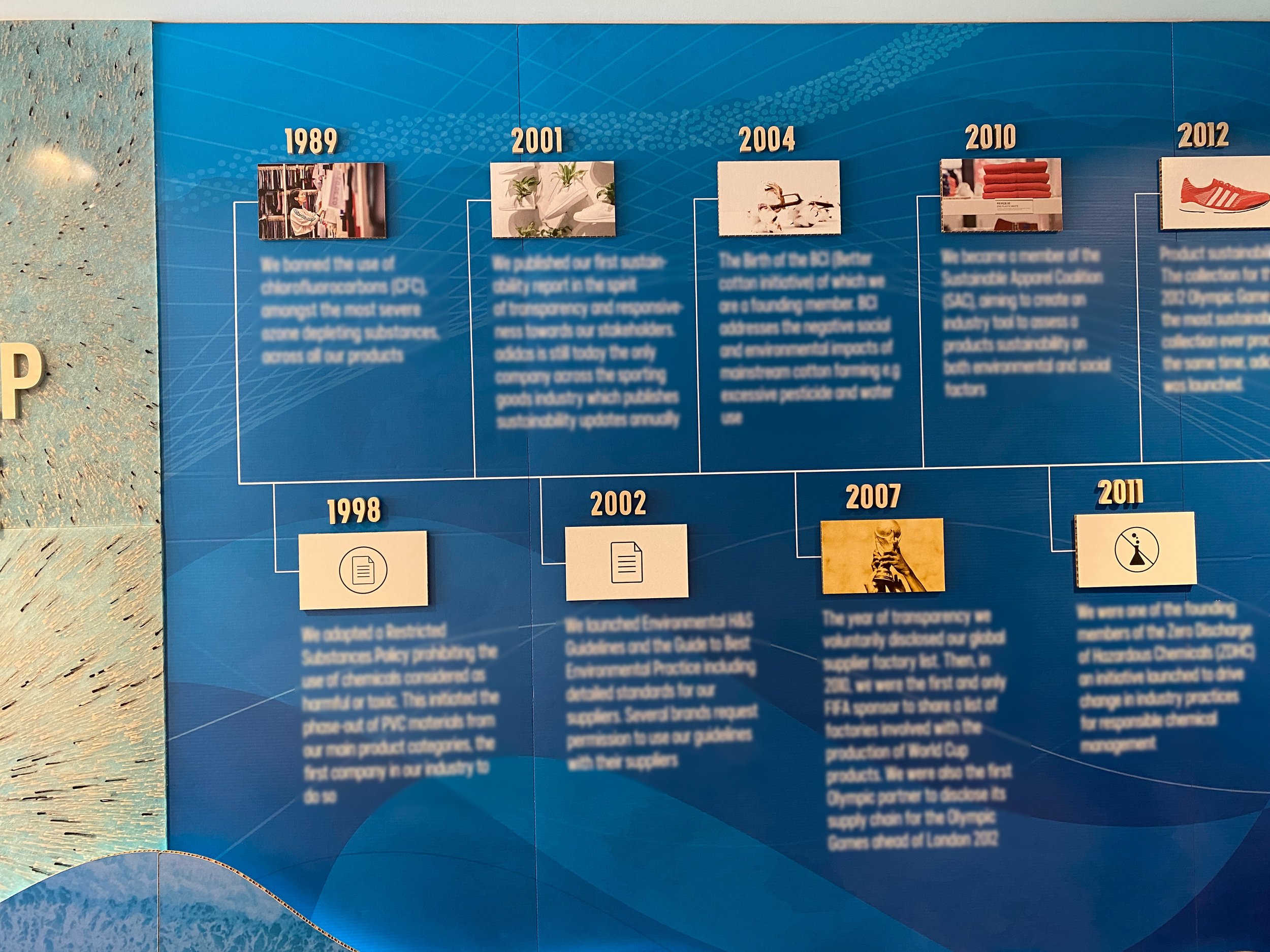
This became the foundation for the Confidence track. If skepticism is the default, the best approach is to demonstrate what has already been achieved, not just what is planned.
From this, I created a content framework based on three time horizons:
Past. Decades of initiatives, milestones, and partnerships that demonstrate a track record.
Present. Current practices in materials, production, and products are backed by specific evidence rather than broad claims.
Future. Ambitions and commitments, honestly presented as goals rather than achievements.
Leading with past accomplishments before focusing on future ambitions directly addresses the research finding: consumers distrust brands that only talk about what’s ahead. By showcasing an actual track record first, the content builds the credibility needed to trust what comes next.
I gathered the historical content by exploring internal archives with colleagues, uncovering materials, photographs, and documentation that had never been publicly accessible. All content was reviewed and approved by legal before publishing.
— COMPREHENSION
How do we provide consumers with a space where sustainability is truly explained, not just promoted?
Consumers who learned about adidas' sustainability efforts viewed the brand more positively. The issue wasn't convincing them; it was their difficulty finding the information, and when they did, it was presented as marketing rather than real substance.
My proposal was to create a dedicated sustainability hub, a serious, well-structured educational destination on adidas.com where consumers could genuinely understand what adidas was doing, using language tailored for them rather than for internal stakeholders.
The hub was founded on three core principles:
Substantive, not promotional. The hub starts with specific, verifiable information instead of aspirational language. Materials, processes, and practices are explained in a way that a non-specialist can understand.
Education is separated from commerce. When consumers seek understanding, the hub doesn't send them to product pages. The research showed that mixing these intents is a major trust breaker. Consumers get the depth they want; the commercial conversation happens somewhere else, on their terms.
Multiple levels of depth. The hub allows for a quick overview of the main milestones or in-depth pages on specific materials, initiatives, and commitments. Consumers choose how deep they want to go.

— COHERENCE
How can we make sustainability visible and consistent within the product journeys consumers already experience?
Most consumers never seek out a sustainability hub. They are browsing products. If sustainability information is only located in a separate place, it reaches only a small portion of the audience who might care about it.
The Coherence work focused on integrating sustainability information into the product surfaces where consumers already engage, such as PDPs, PLPs, and the adidas app, in a way that felt natural rather than added on.
Key design proposals:
Consistent sustainability patterns on PDPs establish a repeatable structure for how sustainability attributes appear on product pages, ensuring the same information is presented consistently each time. If a product includes recycled materials, the consumer sees those details consistently expressed with the same structure, language, and level of specificity.
Consistent consumer-friendly terminology replaced self-invented terms like "Better Choices Range" and unclear labels like "Better Cotton Initiative" with names and explanations consumers could understand. Consistency across the website and app reduced confusion when consumers switched between touchpoints.
Natural bridges from product pages to the hub allow consumers to easily access more educational content when they show interest in a product's sustainability features. This way, they can explore further without losing their place, providing a seamless path for those who want to learn more, without imposing it on everyone.
— OUTCOME
The sustainability hub launched on adidas.com, replacing fragmented, marketing-driven content with a well-structured, evidence-based resource.
The Coherence work reached design proposal stage. The integrations across PLPs, PDPs, and the app set out how sustainability would carry through the wider digital ecosystem, linking content to actual products and materials rather than keeping it separate in one part of the site.
— SUSTAINABILITY HUB HOME
(Comprehension)
The hub opens with evidence, not promises, structured around past accomplishments, current practices, and future goals
Click to see full image
— OUR MISSION PAGE
(Confidence)
Mission and ambition are presented alongside specific milestones and proof points
Click to see full image
Decades of sustainability initiatives made visible for the first time, addressing the research finding that consumers are skeptical because they don't see what has already been achieved
— HISTORICAL TIMELINE
(Confidence)
Click to see full image
— MATERIALS PAGE
(Comprehension)
Material information explained in consumer-friendly language, with enough depth for consumers who want to go further
Click to see full image
— MATERIALS DETAIL PAGE
(Comprehension)
Detail pages provide the facts, processes, and specifics that research showed consumers expect
Click to see full image
— REDUCE FOOTPRINT INFO PAGE
(Confidence / Comprehension)
Transparent communication about processes, not just outcomes
Click to see full image