2024 - 2026

Self-service kiosks and customer care platforms at a global airline scale
Case overview
Air France–KLM operates a variety of passenger- and agent-facing systems that support the airport experience at scale. This case discusses two independent product domains that were part of the same engagement period but serve different users, contexts, and problems.
Passenger self-service kiosks; used by large volumes of passengers daily at over 125+ international airports
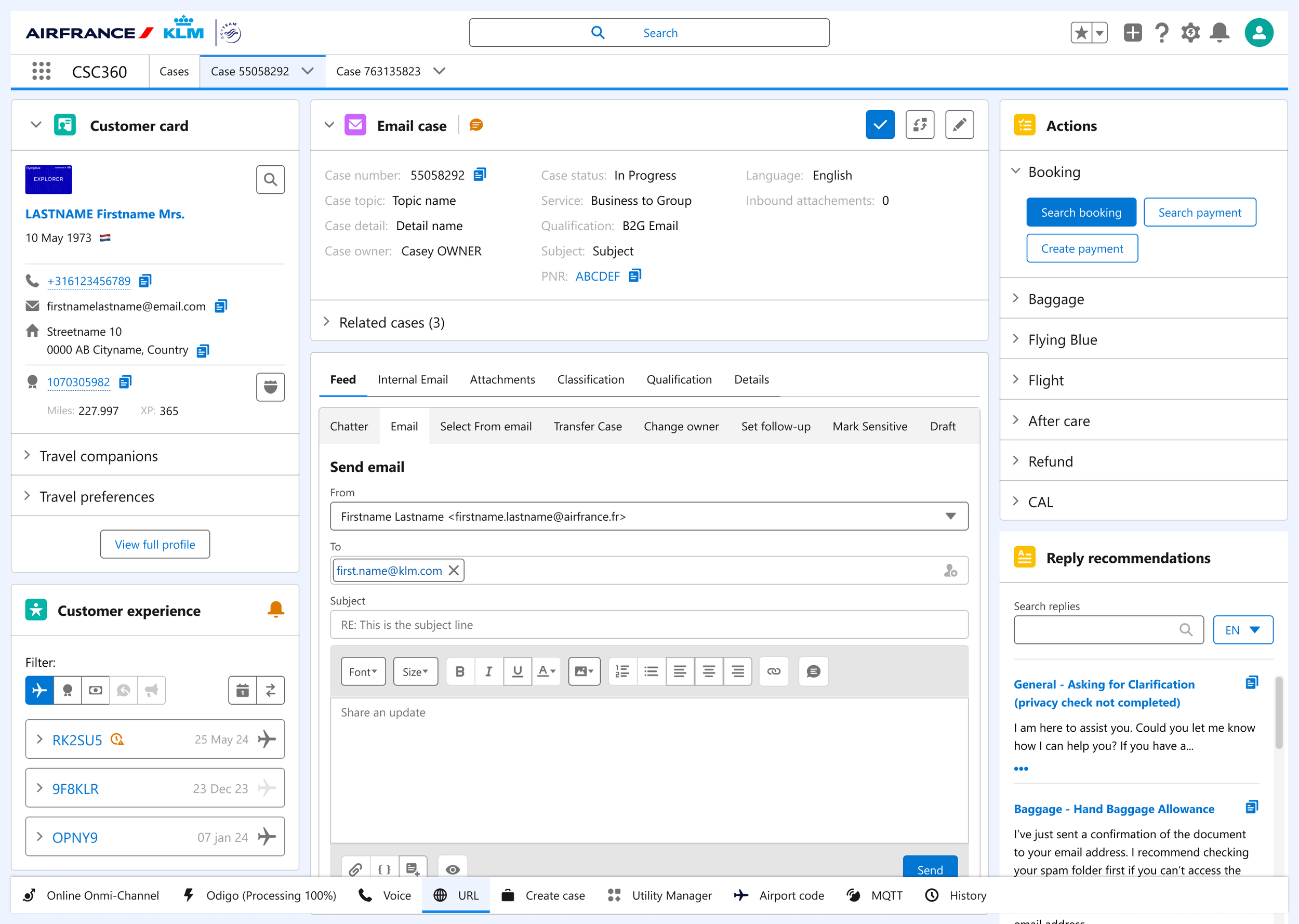
CSC360, a Salesforce-based customer care platform used by over 5.000 assistants worldwide
Although the work on these systems was conducted in parallel, they are presented separately to highlight their distinct roles within the organization.
Role
UX Lead / Principal Product Designer (Freelance)
Context
Large-scale airline systems operating in high-pressure, real-world environments.
Product domains
Passenger self-service kiosks
(airport check-in & bag-tagging)CSC360
Salesforce-based customer care console
Focus
Simplifying complex flows, reducing unnecessary complexity, and supporting consistent UX decisions across teams.
Domain 1
Self-service kiosk
Context
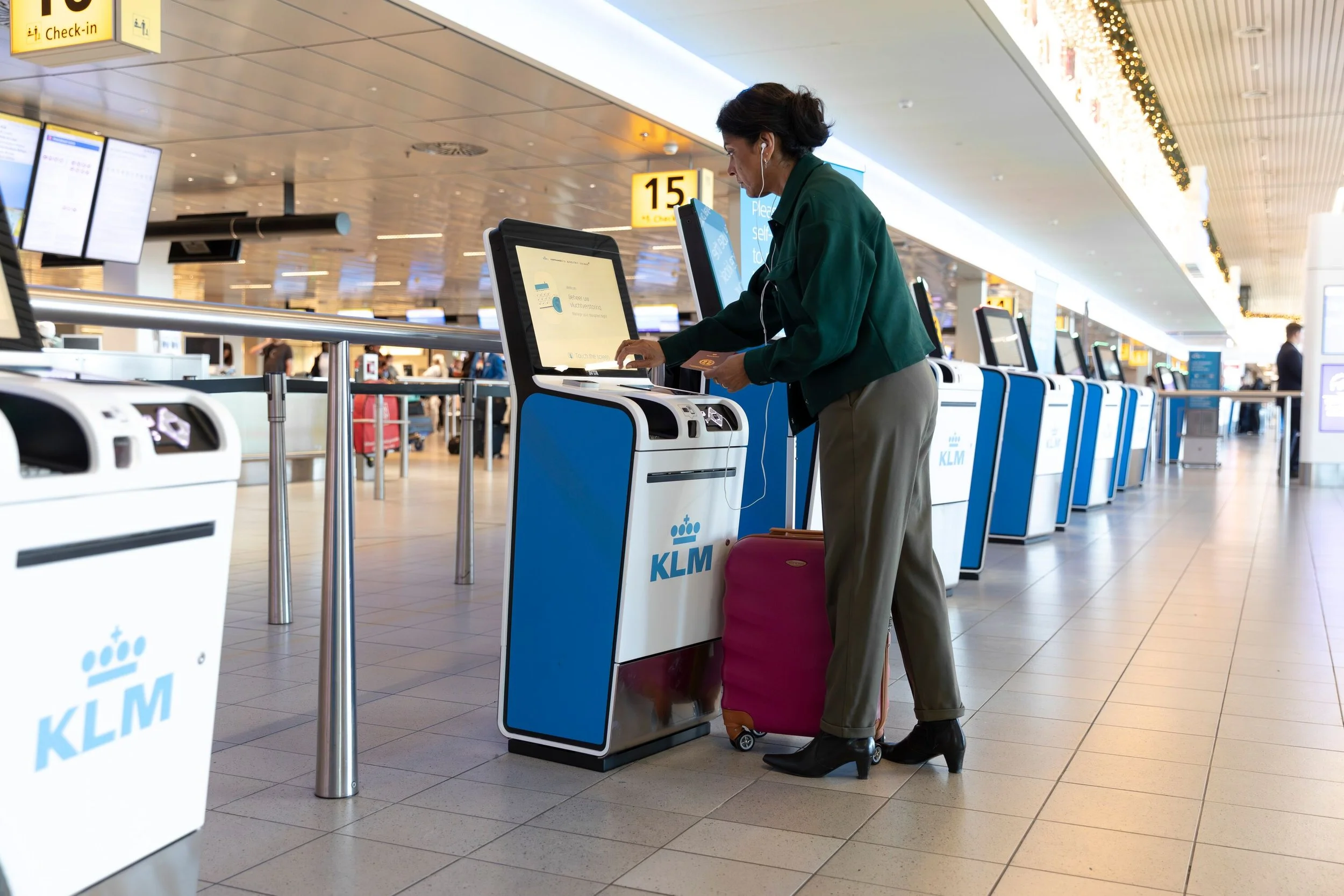
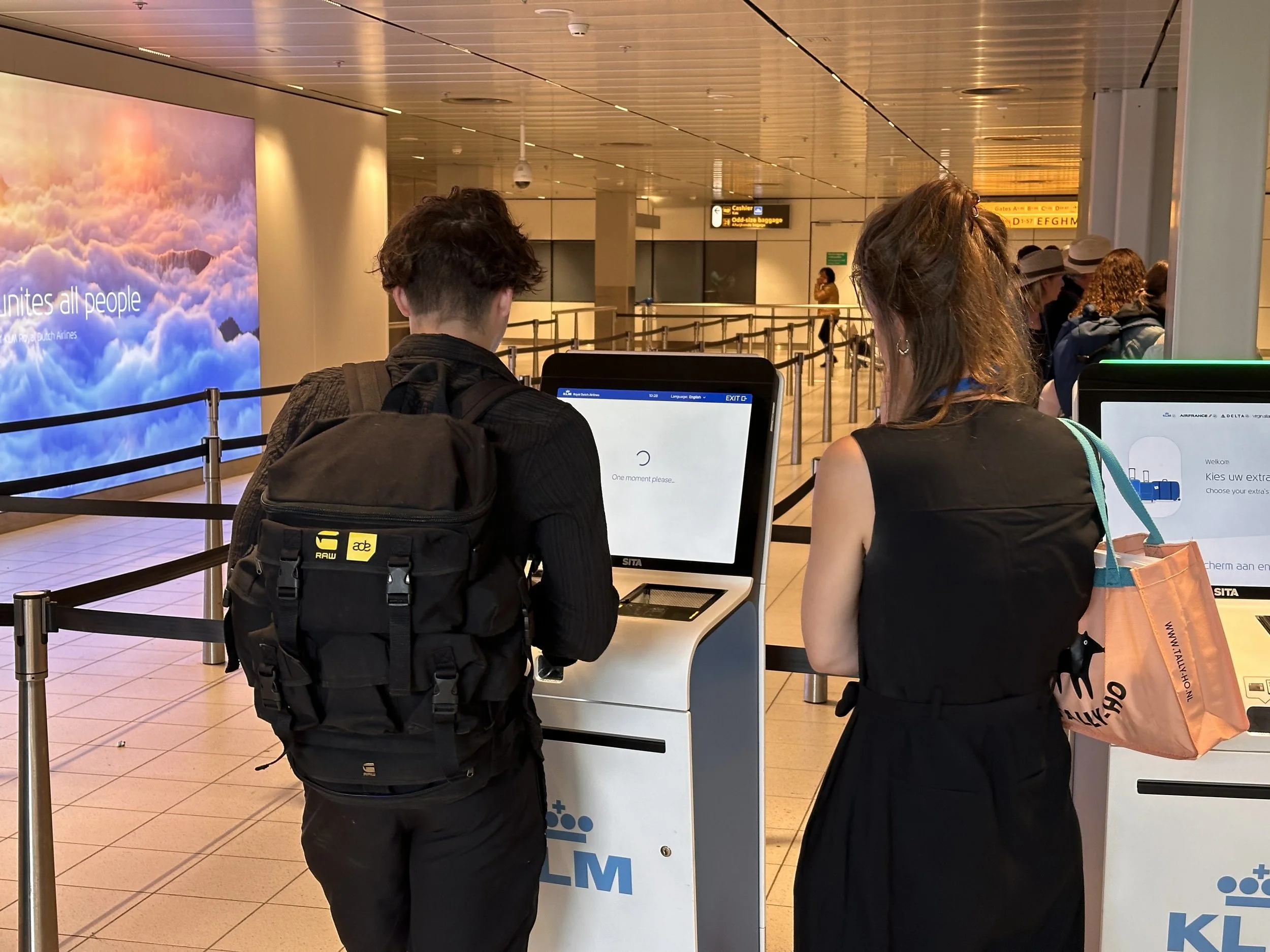
Air France–KLM runs passenger self-service kiosks at over 125 international airports, handling key tasks like check-in, seat selection, and bag-tag printing.
These kiosks are used by large numbers of passengers every day, often under time constraints, in unfamiliar environments, and with little margin for error. What seems simple in theory becomes much more challenging in the airport setting, where uncertainty and stress are central factors.
The Challenge
The kiosk application had not undergone a UX structural assessment for a long time. As a result, numerous issues had built up.
Unclear interaction patterns
Messaging that did not always support a clear job to be done
Inconsistencies between user flows that caused hesitation and friction
At the same time, several developments converged:
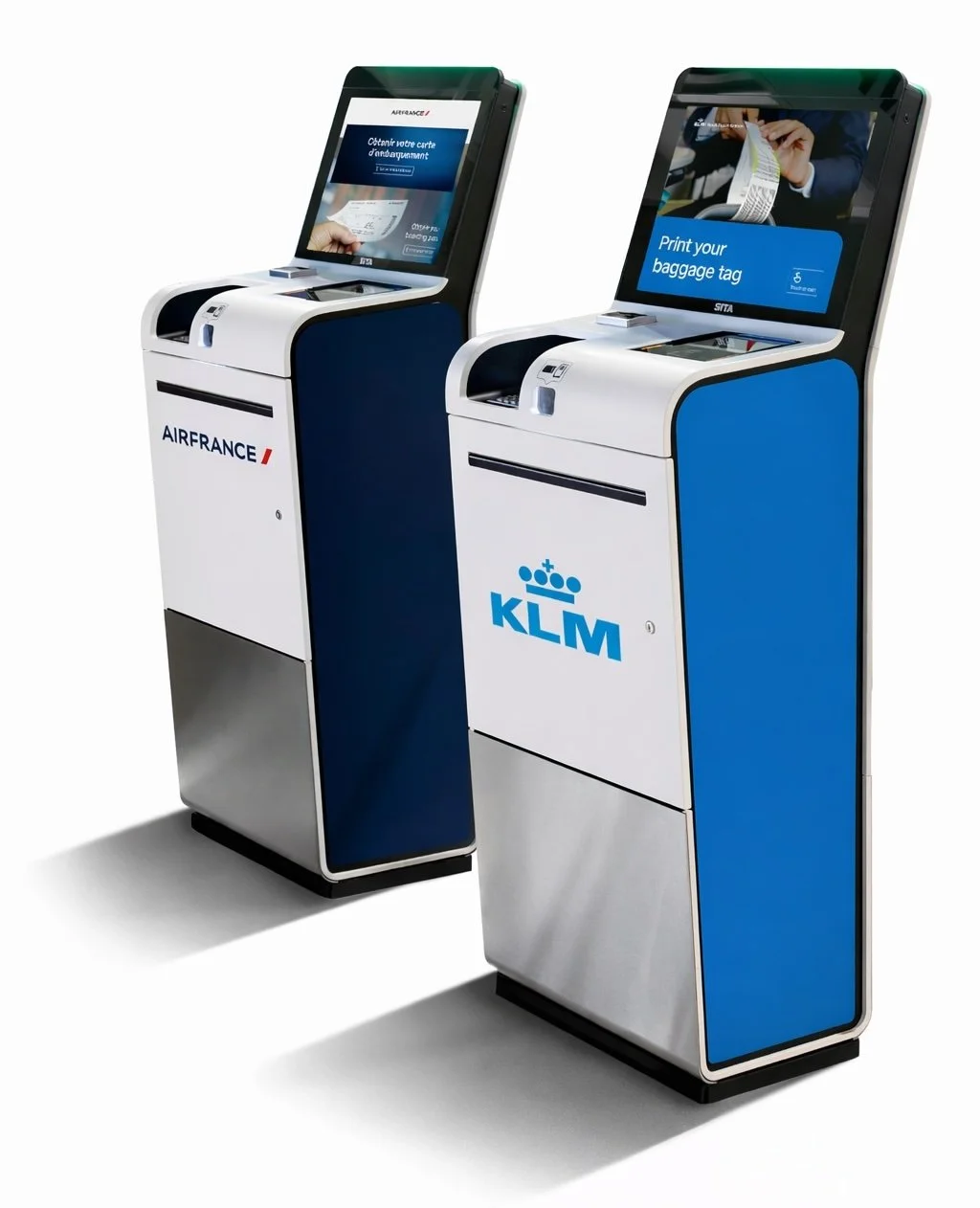
The introduction of new kiosk hardware, enabling more advanced interaction possibilities
Early experiments with conversational AI to explore dialogue-based passenger support
The rollout of a new KLM design language
Nearly a year of observation and passenger research into real-world kiosk usage
A refreshed kiosk experience emphasizing clarity and passenger confidence — without disrupting a system in daily use at scale.
Focus and approach
Based on observation and analysis, it became clear that the main issue was not missing functionality, but passenger confidence.
Passengers often approached the kiosk unsure of what to expect, hesitant to make mistakes, and quick to feel blocked when something did not work as anticipated. Even small moments of friction had a disproportionate impact in this context.
Insights from research and observation led to the redesign of UX flows and messaging to boost passenger confidence. The new KLM design language provided an opportunity to enhance the application’s appearance and user experience, with a focus on clarity, reassurance, and trust.
Our approach focused on:
Clarifying intent and next steps at critical decision points
Reducing cognitive load during the entire journey.
Improving recovery when a flow cannot be completed.
Making physical interactions, such as attaching bag tags, easier to understand.
Aligning interaction logic, flow, and visual language to emphasize reassurance and clarity.
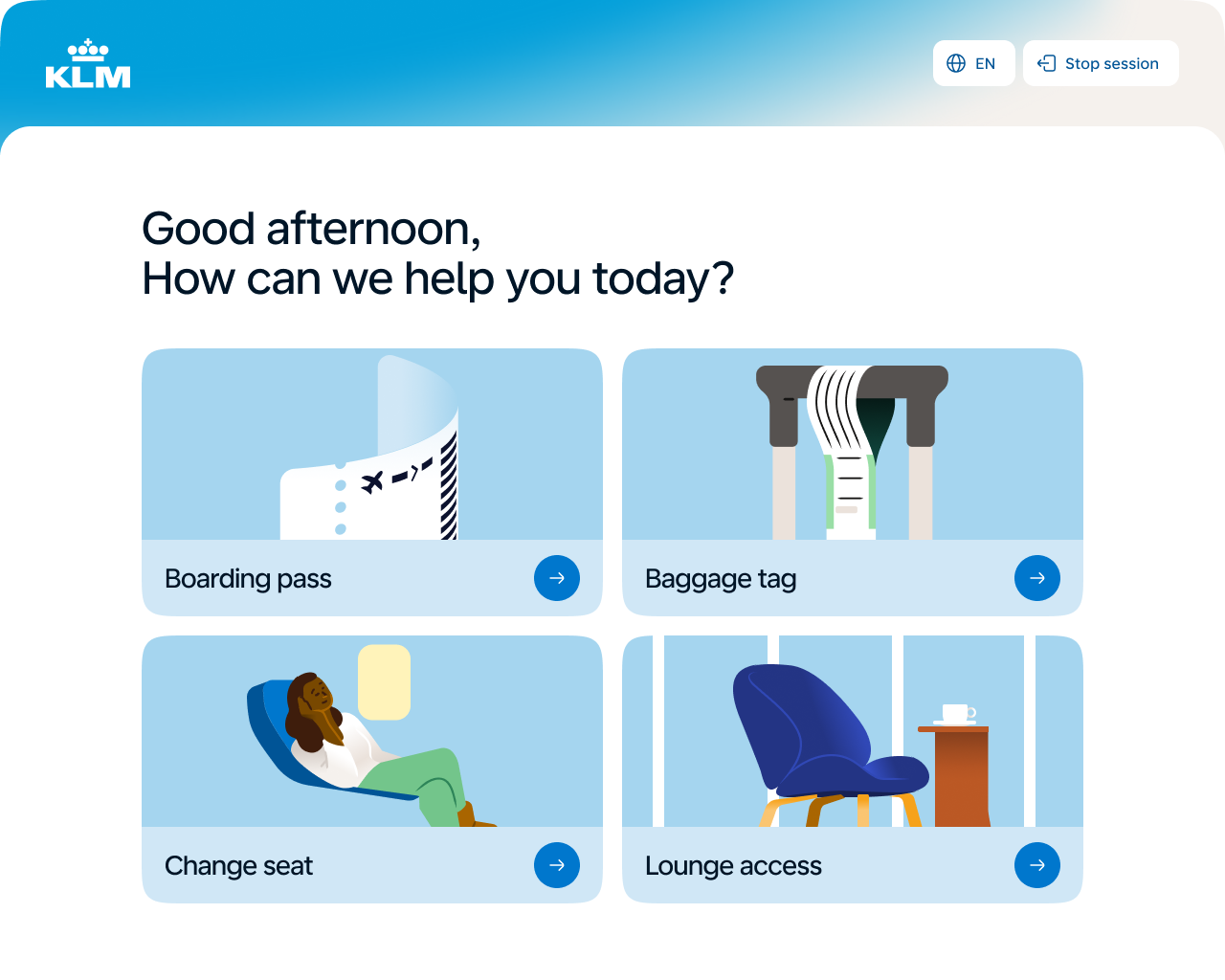
New kiosk 2026
Overview of the renewed kiosk application, combining improved UX flows with the new KLM design language. Planned for rollout in late 2026.
Kiosk 2026 redesign
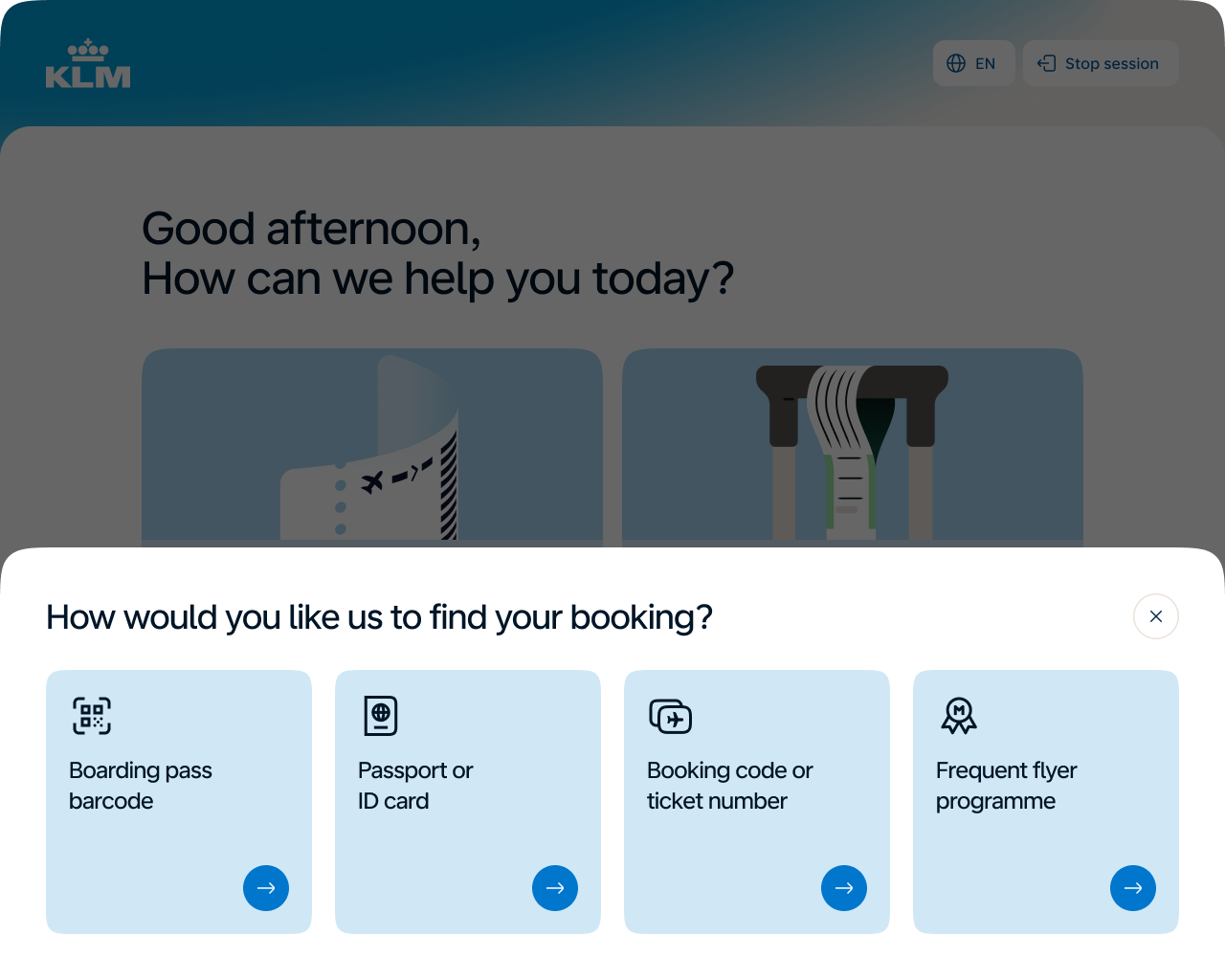
Identification screen
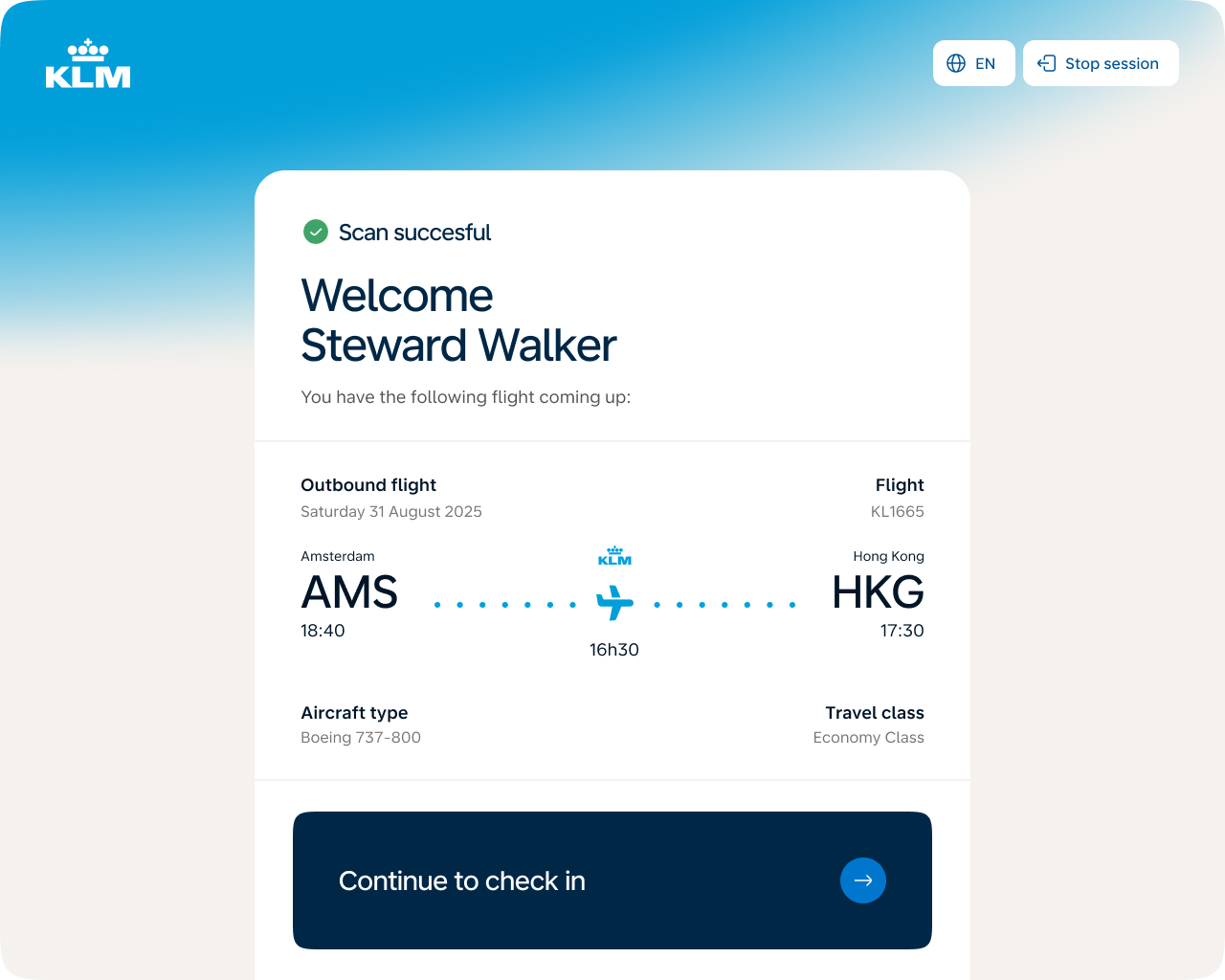
Passenger details
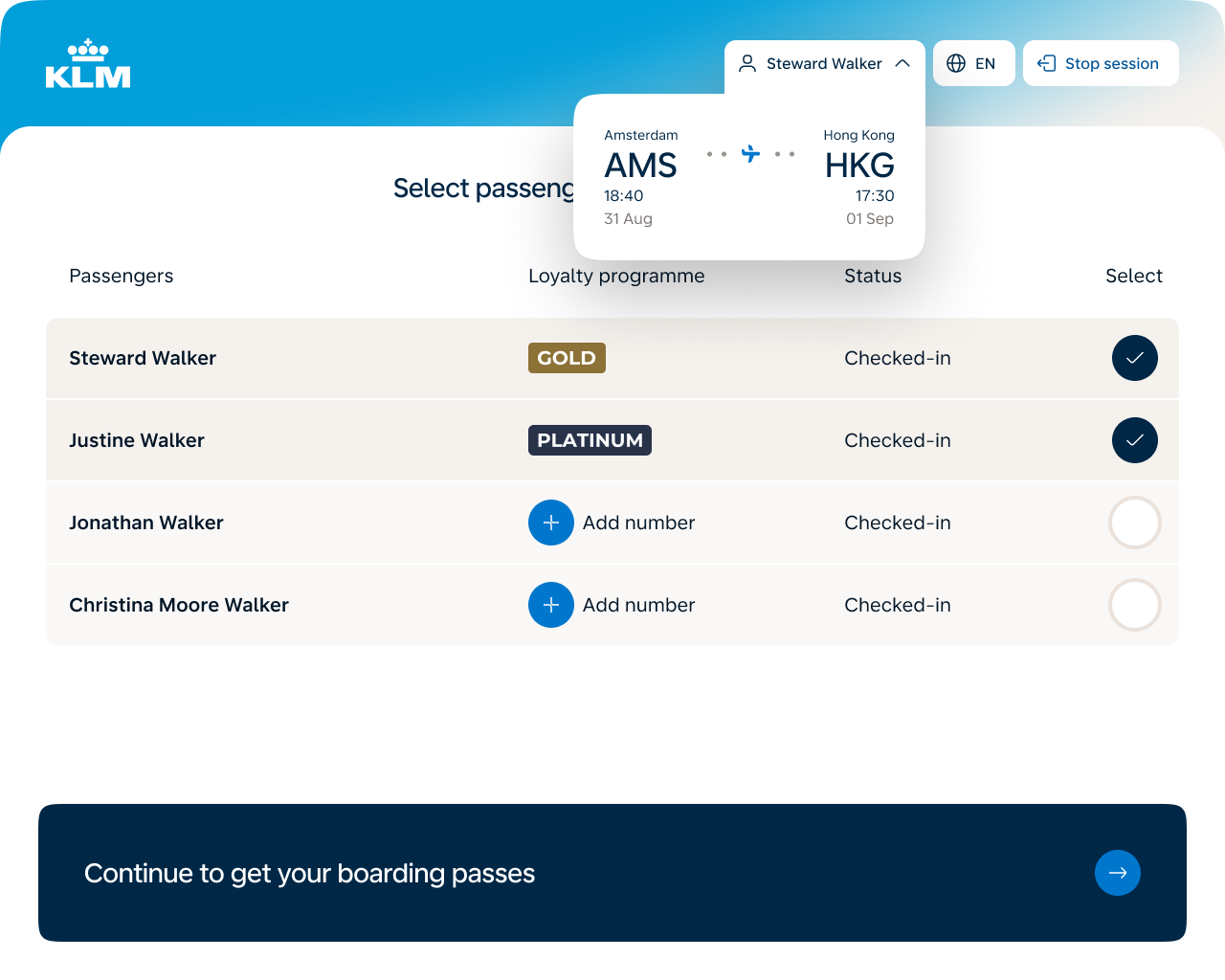
Checking in paggengers from group
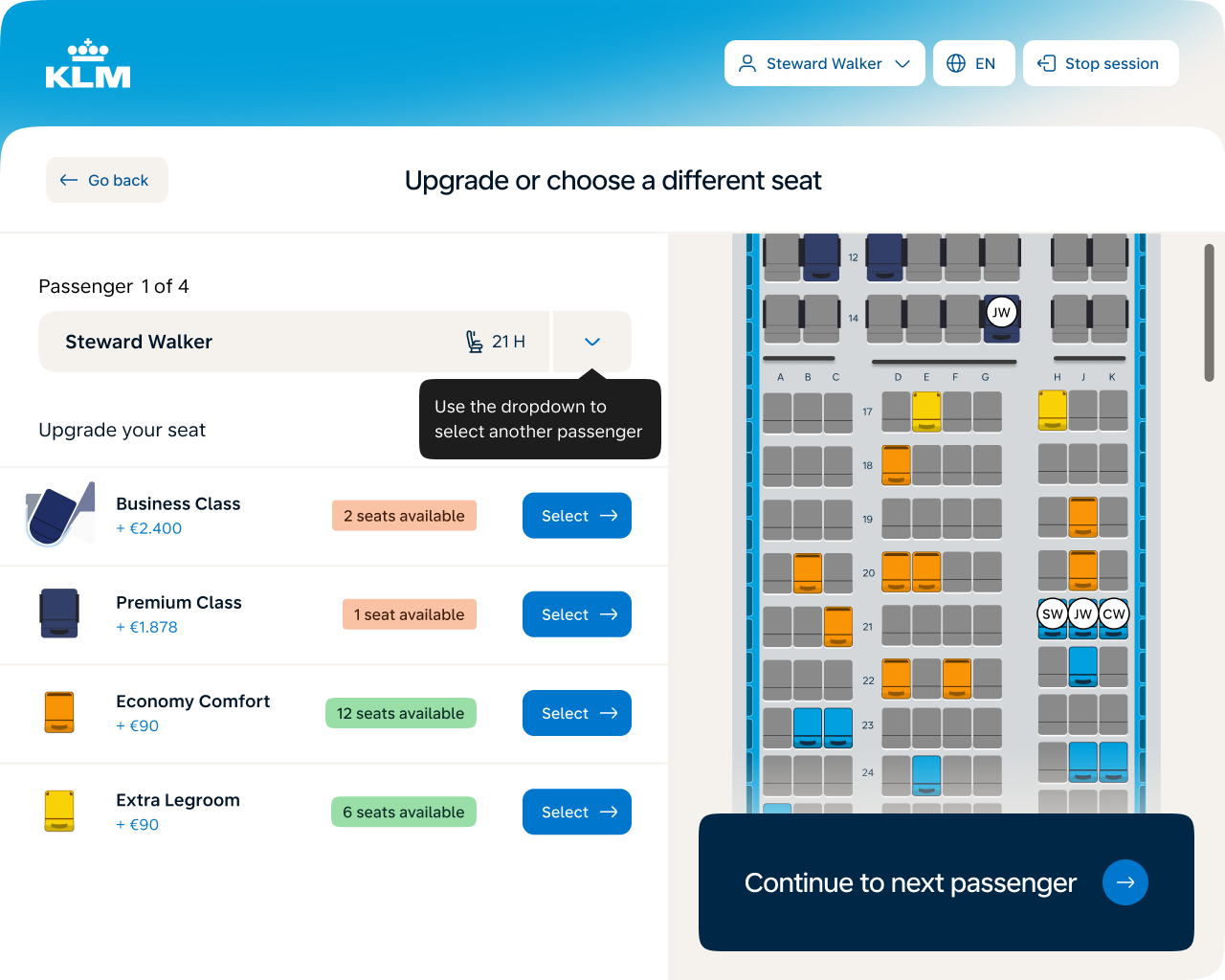
Seat selection & upgrade
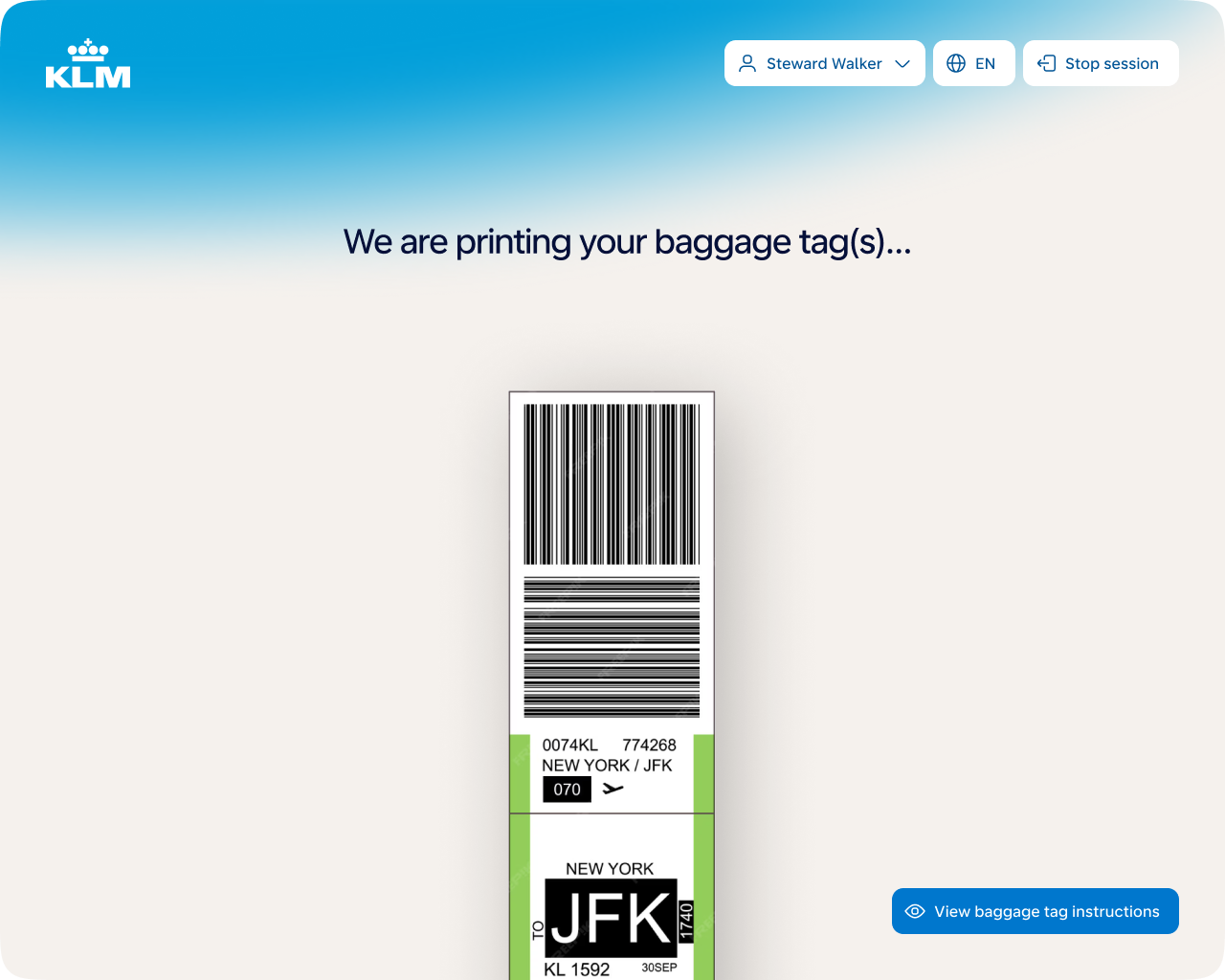
Bag tag printing
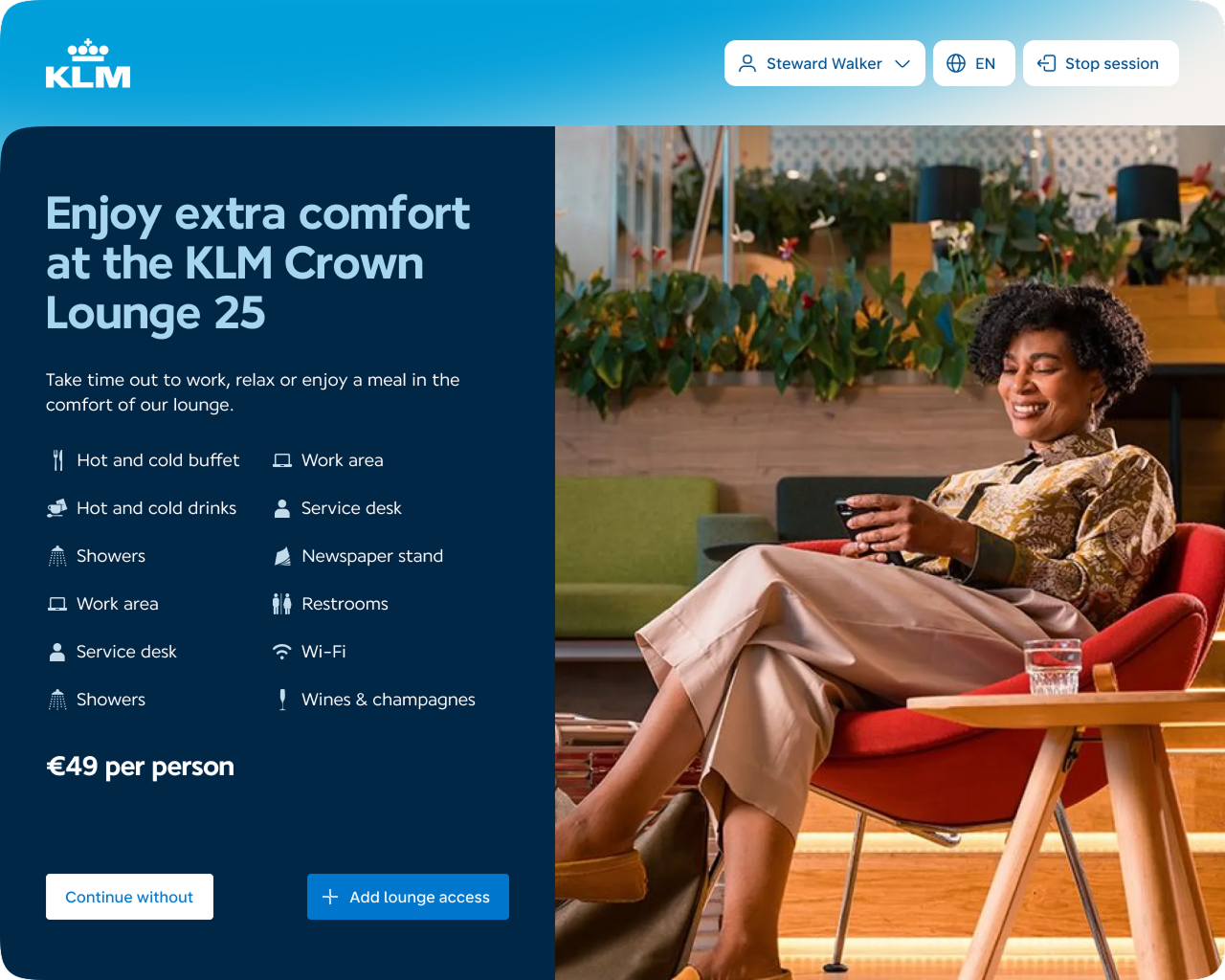
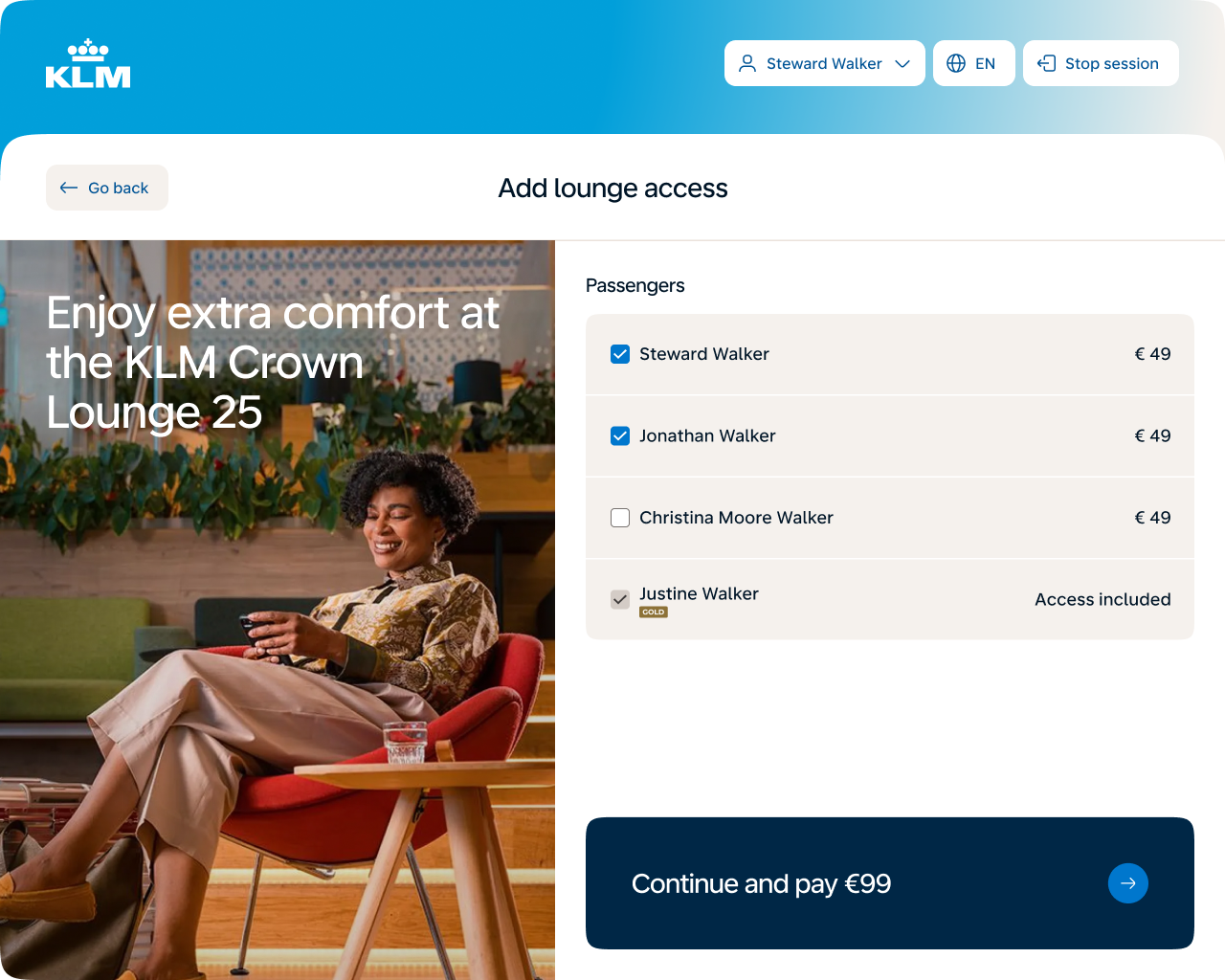
Marketing page for lounge access
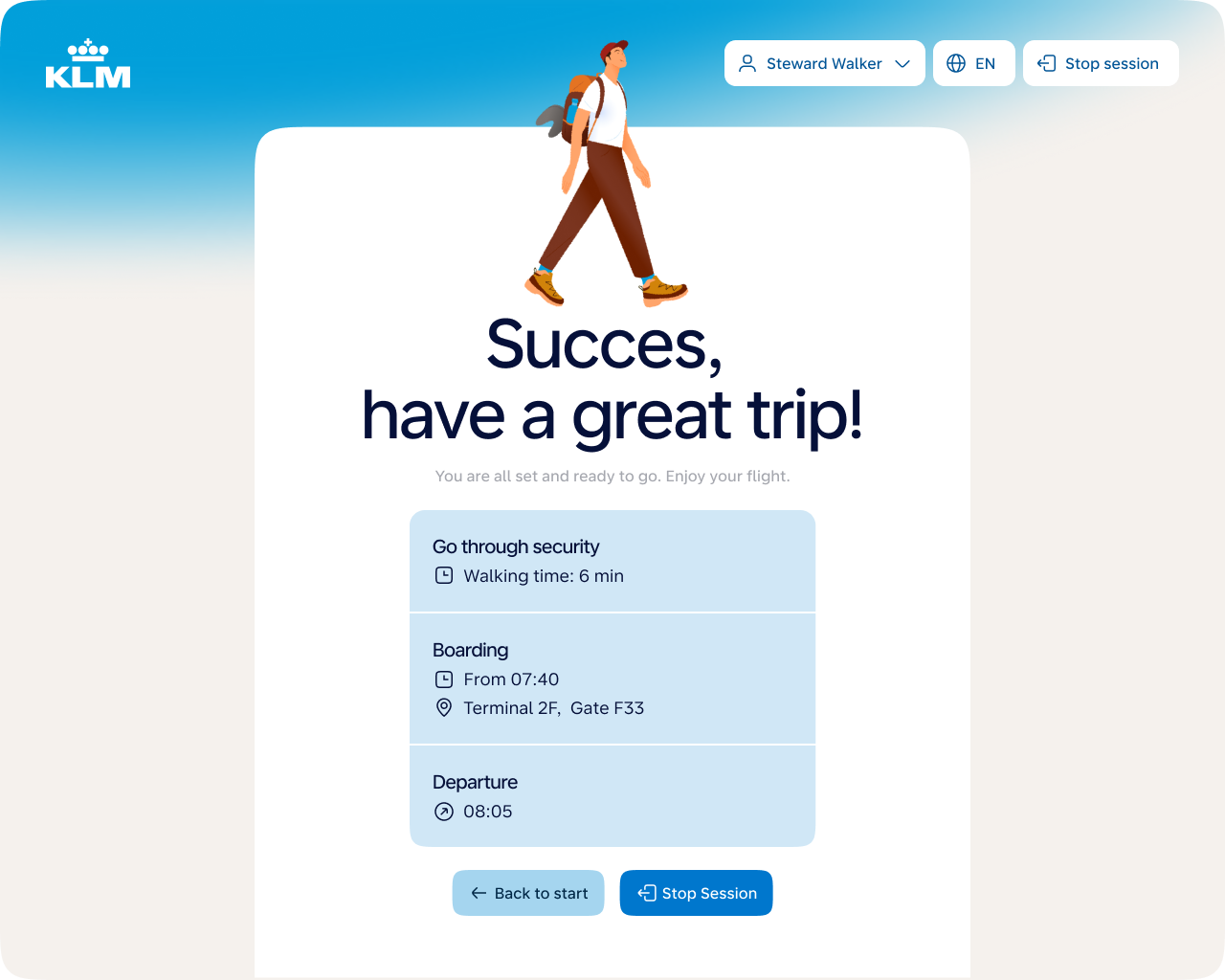
Confirmation screen

Domain 2
Customer care platform (CSC360)
Context
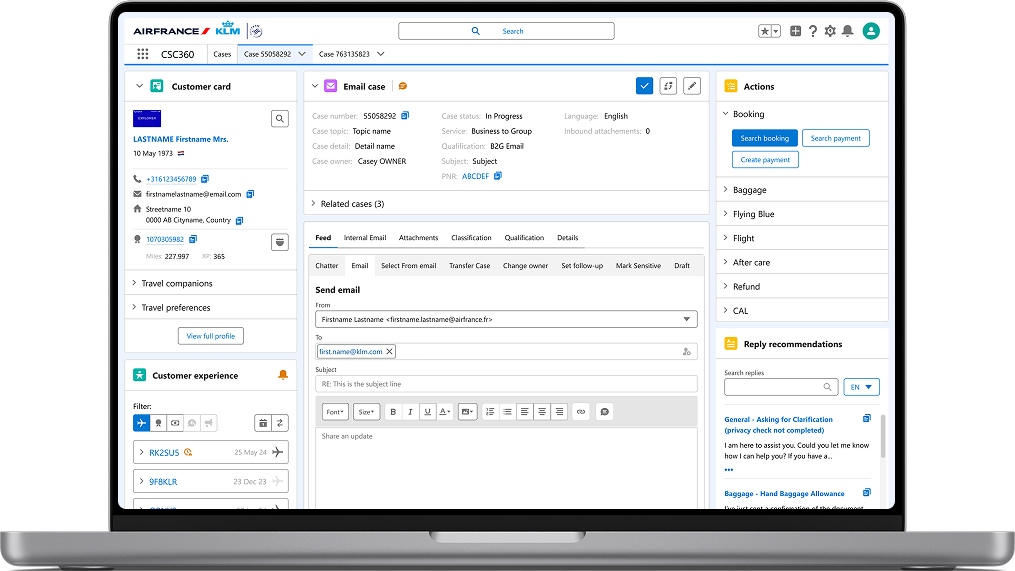
CSC360 is a Salesforce-based customer care platform used by over 5,000 service assistants worldwide. Assistants use the platform to assist passengers across various contact channels, including phone, email, webchat, and social media.
The platform functions in a high-volume, operational environment where speed, accuracy, and consistency are crucial, and assistants must maintain an overview while managing complex passenger cases.
The Challenge
The primary challenge CSC360 aimed to address was cross-channel complexity for assistants.
Before CSC360, various contact channels were managed in separate systems. Transitioning between them was often challenging and time-consuming, forcing assistants to adjust to different workflows and interaction styles.
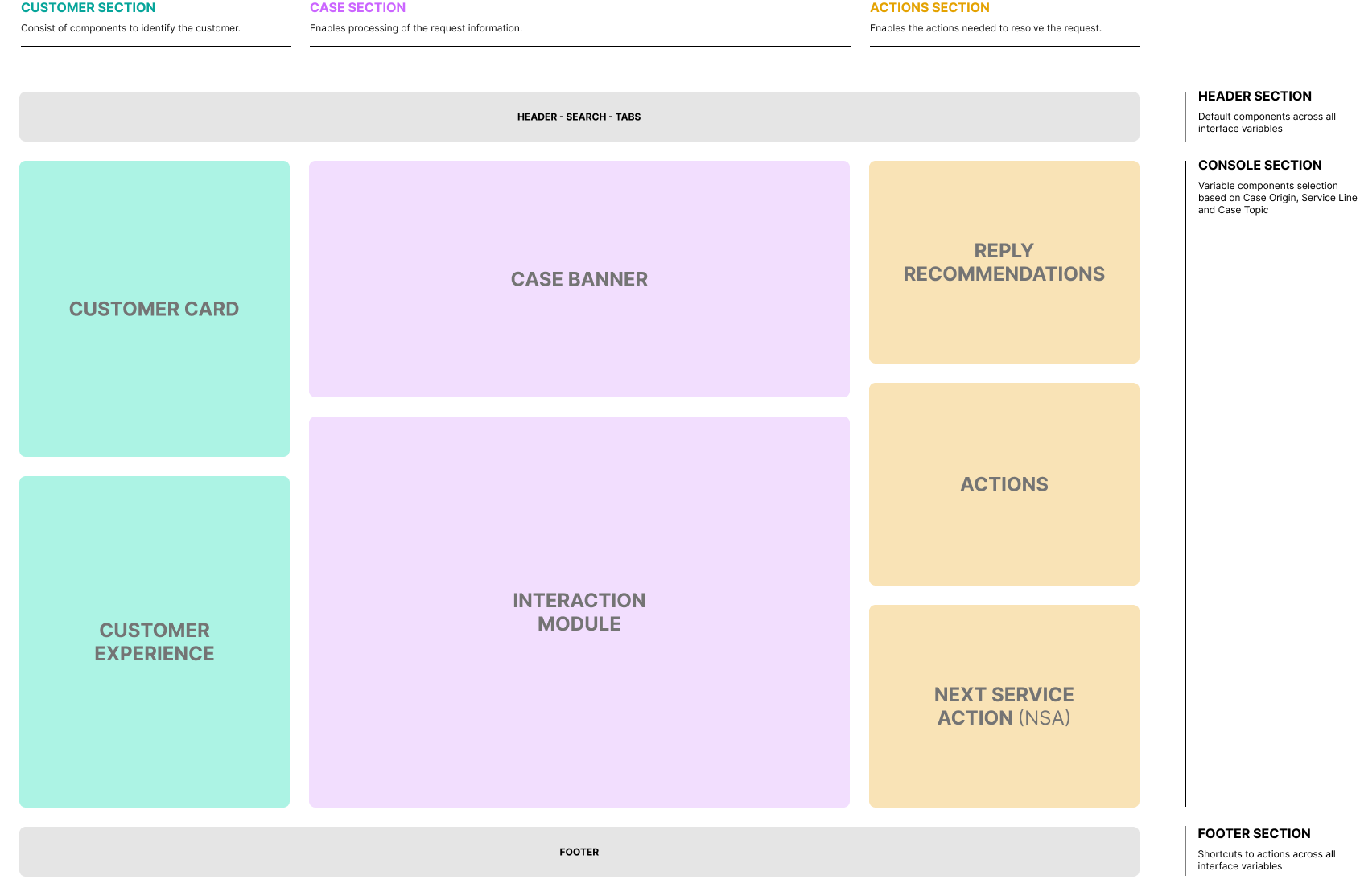
CSC360 was introduced to unify all case sources—phone, email, webchat, and social media—into a single, consistent console, enabling assistants to manage different types of cases without switching tools or mental models. The challenge was to ensure this unified experience genuinely reduced complexity during daily use.
Focus and approach
The goal was to develop a consistent and reliable experience across all case sources within one console.This meant:
Supporting a consistent mental model across any channel.
Minimizing friction during case transitions.
Helping service assistants understand context quickly.
Ensuring that core workflows functioned in a familiar and reliable manner.
Key user involvement
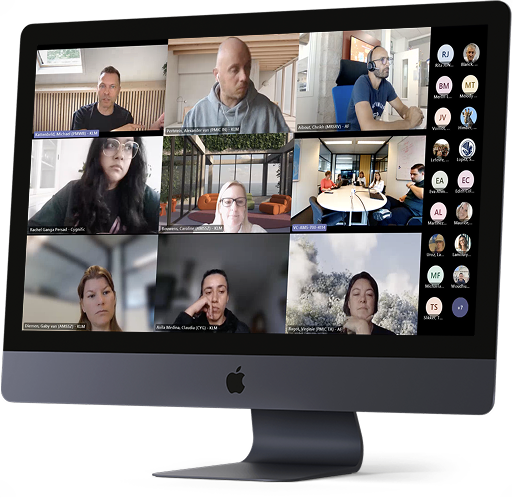
A key part of the CSC360 project was actively involving assistants as primary users.
Along with a service designer, we collaborated with an expanding group of key users from call centers across Europe, Asia, Africa, and South America. Over time, this group grew to 80-100 assistants, representing a broad range of daily users.
Early on, the focus was on listening and learning: understanding how the console was used in practice, where friction occurred, and what assistants considered important. As new design ideas emerged, we validated them with this group beforehand, using their feedback to guide open discussions and improvements.
This approach helped identify incorrect assumptions early, confirm the right direction, and build shared understanding. It also secured early buy-in, with key users acting as ambassadors within their centers once changes were implemented.
Over time, this method evolved to include regular on-site center visits by the product team, keeping us closely connected to real-world use after launch and enabling ongoing improvements for CSC360 based on direct feedback.
Instead of redesigning individual channels, the focus was on shaping the overall experience so assistants could operate confidently within a single environment.
My contribution
Within the CSC360 project, I contributed by:
Analyzing and restructuring cross-channel workflows.
Designing custom, Air France–KLM–specific components on top of the Salesforce Lightning Design System, where standard components did not meet business or user needs.
Translating business and user needs into reusable interaction patterns where standard Salesforce components fell short.
Collaborating closely with product owners, developers, and stakeholders to align custom UX solutions with platform constraints.
Integrating ongoing feedback from service assistants into design choices
Supporting more consistent UX decisions across teams.
Outcome
The work on CSC360 contributed to:
A more uniform experience across all contact channels.
Reduced friction when switching between case origins.
Enhanced clarity and confidence for service assistants.
A stronger, more flexible UX foundation within Salesforce, supported by custom components aligned with Air France–KLM needs.